ow Eternal Sunshine of the Spotless Mind Was Directed Like Two Different Movies
What if one of the most emotionally powerful films ever made was secretly directed as two completely different movies at the same time?
That’s exactly what happened in Eternal Sunshine of the Spotless Mind. Director Michel Gondry gave radically different instructions to his two leads—and the result wasn’t chaos. It was brilliance.
On one side, Kate Winslet was pushed to be loud, impulsive, and unpredictable. On the other, Jim Carrey was told to hold everything in, to play it painfully real.
And somehow, that creative clash is exactly why the film feels so human.
Here’s how this unconventional directing choice turned a love story into something unforgettable.
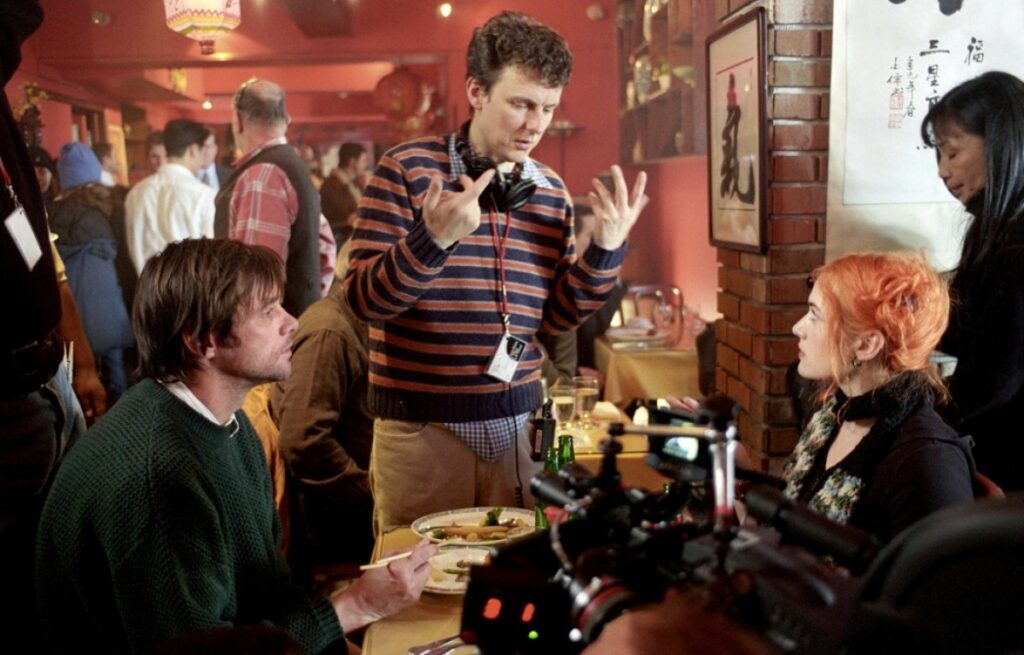
The Unusual Directing Experiment Behind the Film
Most directors aim for tonal consistency. Same emotional wavelength, same acting style, same rhythm.
Not Gondry.
Instead, he split his vision in two.
- One performance would lean into chaos
- The other would anchor the story in realism
Same scenes. Same relationship. Completely different rules.
Sounds risky, right?
It was. But it paid off in a way few films ever achieve.
Why Kate Winslet Was Told to “Go Big”
Kate Winslet’s character, Clementine, is impulsive, emotional, and wildly unpredictable.
So Gondry pushed her even further.
He encouraged her to:
- Lean into comedy
- Be bold and exaggerated
- Embrace chaos and spontaneity
The result?
Clementine feels like a force of nature—messy, vibrant, and impossible to pin down.
She doesn’t just exist in the story. She disrupts it.
And honestly, that’s exactly what the character needed.
Why Jim Carrey Was Told to Do the Opposite
Now here’s where it gets really interesting.
Jim Carrey—known mostly for over-the-top comedy—was told to do the complete opposite.
Gondry instructed him to:
- Play everything grounded
- Treat the story like a drama
- Let the pain feel real, not performative
No big reactions. No comedic safety net.
Just quiet heartbreak.
And it worked.
Carrey’s performance became one of the most restrained—and emotionally devastating—of his career.

The Collision That Made the Film Feel Real
So what happens when you put:
- A chaotic, expressive character
- Next to a quiet, emotionally suppressed one?
You get something incredibly familiar.
Because real relationships feel exactly like that.
One person:
- Feels everything loudly
- Acts on impulse
The other:
- Holds back
- Processes internally
That tension? That mismatch?
That’s not a flaw in the film.
That is the film.
Why the Movie Feels Both Funny and Heartbreaking
Here’s the magic.
Because the performances are so different:
- The comedy never feels forced
- The drama never feels exaggerated
Instead, they coexist.
One moment makes you laugh…
The next hits you with something painfully real.
You might be wondering: wouldn’t that tonal clash feel inconsistent?
It doesn’t.
It feels human.
Life doesn’t stick to one tone—neither does this film.
A Risk That Could Have Failed (But Didn’t)
Let’s be real—this could have gone terribly wrong.
Two acting styles in one movie can easily feel disjointed.
But Gondry made it work because:
- The emotional core stayed consistent
- Both performances served the relationship
- The contrast enhanced the story instead of distracting from it
It wasn’t randomness.
It was controlled contrast.

The Genius Behind the Method
Michel Gondry didn’t just direct scenes—he engineered emotional friction.
And that friction:
- Created authenticity
- Made the relationship feel unpredictable
- Gave the film its unique tone
It’s a reminder that sometimes, breaking the rules is exactly what makes something timeless.
What Filmmakers (and Fans) Can Learn From This
This approach teaches a powerful lesson:
You don’t always need uniformity to create harmony.
In fact:
- Contrast can deepen storytelling
- Opposing performances can reveal truth
- Emotional imbalance can feel more real than perfection
It’s bold. It’s unconventional.
And clearly—it works.
Final Thoughts
Eternal Sunshine of the Spotless Mind isn’t just remembered for its story or visuals.
It’s remembered for how it feels.
Funny. Painful. Messy. Real.
And that emotional complexity exists because two actors were, in a way, living in two different movies—while telling the same story.
That’s not just smart directing.
That’s filmmaking at its most daring.


Creative strategist dedicated to uncovering the stories behind today’s most visionary independent creators. With a background in film marketing and festival programming, Marco writes about cinema, distribution, and the evolving landscape of modern cinema. His work focuses on empowering filmmakers to turn creativity into sustainable careers.