
Some stories are created from imagination. Others come from experiences that remain close to the person telling them. Keep Me Out, the short film created by Alexandra Fayuse, grows from the second kind of truth. Built from her own experiences with bullying and mental health, the project turns difficult memories into a wider reflection on empathy, personal boundaries, responsibility, and the impact people can have on one another without fully realizing it.
Fayuse understands the subject from personal experience. As a child, she was bullied at school, and over time, that treatment began to affect her mental health. At the age of 13, she was diagnosed with a mental health condition and spent a little more than four months in a hospital.
That period became an important turning point. It was there that she came to understand that giving up was not the answer. Growth was.

Alexandra Fayuse
Living Beyond a Diagnosis
For Fayuse, growth did not mean ignoring what had happened or pretending that mental health was no longer part of her life. It meant learning to accept that experience without allowing it to become the complete definition of who she was.
That distinction became especially difficult during high school. Fayuse has shared that she was often referred to by a shortened version of her diagnosis. Instead of being seen as a complete person, she was sometimes reduced to a label connected to one part of her life.
Carrying that label through school was not easy. The experience became another reminder of how quickly people can define someone through a condition, rumor, struggle, or difference without understanding the person behind it.
Those memories later became part of the reason she created Keep Me Out.
The film does not simply revisit painful experiences for dramatic effect. Instead, Fayuse uses them as a foundation for a story that asks audiences to think more carefully about the consequences of judgment, cruelty, curiosity, and indifference.
The Impact We Leave on Others
Although depression and anxiety appear as examples within the film, Fayuse has made it clear that Keep Me Out is not intended to focus only on those conditions. Mental health is far broader, and many of the challenges people face remain invisible to those around them.
A person may be dealing with fear, grief, stress, emotional exhaustion, trauma, loneliness, uncertainty, or another deeply personal struggle while appearing completely composed from the outside.
That reality sits at the center of the film.
Keep Me Out asks viewers to consider how their words and actions may affect someone whose circumstances they do not understand. A careless comment, a joke, gossip, pressure, or a lack of concern can become another burden for a person who is already carrying more than others can see.
The film also speaks strongly about personal boundaries. No one should be forced to reveal private parts of their life simply because someone else wants answers. A person’s struggles should not become entertainment, gossip, or an excuse for judgment.
Compassion should not depend on knowing every detail.
That idea expands the film beyond a story about mental health. It becomes a reflection on respect and on the responsibility people have toward one another.

Turning Personal History Into Purpose
What gives Keep Me Out particular emotional strength is the way Fayuse has chosen to use her own history. Experiences that once caused pain have become the foundation of a project designed to create awareness and encourage conversation.
The film does not ask audiences to focus only on what happened to her. Instead, it invites them to examine their own behavior.
That is where the project finds its broader meaning.
Independent cinema often becomes especially powerful when a personal story opens the door to something universal. Keep Me Out does that by turning an individual experience into a reminder that everyone is carrying something, even when it cannot be seen.
Through the film, Fayuse transforms vulnerability into perspective and painful memories into purpose. The message is simple but meaningful: people may never fully know what someone else is facing, but they can still choose not to make that person’s burden heavier.
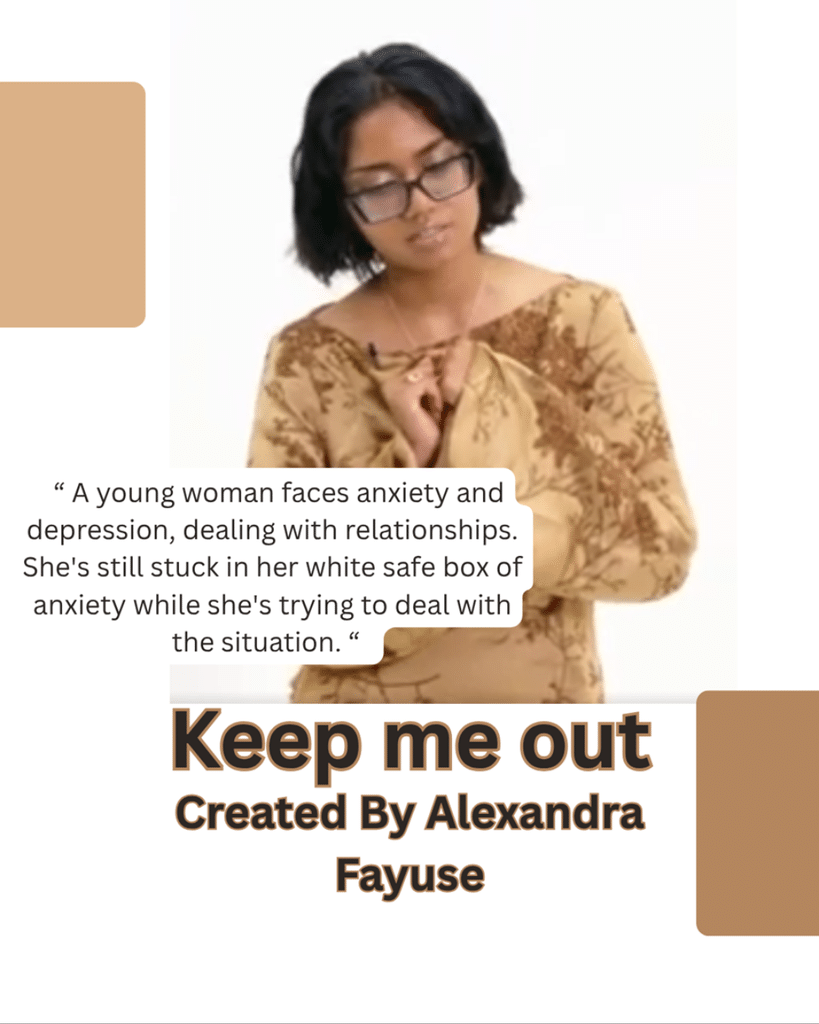
Connect with Alexandra Fayuse

Claire Beaumont brings a strong foundation in journalism and a dynamic background in the film industry to her role as Chief Contributor and Editor. With over ten years of experience reporting, editing, and managing content across digital platforms, she has developed a keen editorial eye and a distinctive voice that shape the tone and direction of our publication.
Her career began in investigative journalism, where she covered arts and culture for leading media outlets, before transitioning into script development and editorial consulting within independent film. This unique blend of storytelling expertise informs her approach to content strategy, ensuring that every piece published is both compelling and deeply informed.
Claire oversees our editorial calendar, mentors our team of writers, and continues to contribute long-form features that bridge narrative depth with journalistic rigor.